Begin with the essential details
It can be difficult to condense a life into a few lines. Start with the information you know you want to include: the name, dates and a relationship or description that feels right. You can then consider whether you want a short personal message, a quotation or wording connected with your faith or culture.
There is no need to find everything in one sitting. Keep a shared draft for family suggestions and identify one person to bring the agreed wording together. This helps prevent small differences between versions being carried into the design.
Choose language that sounds like your family
A simple sentence can carry as much meaning as a longer passage. Think about what you would want someone visiting the grave to understand about your loved one. A familiar expression, a valued quality or an affectionate description may feel more personal than a phrase chosen only because it is traditional.
If you are considering religious wording, ask an appropriate faith representative to confirm its suitability and accuracy. For another language, involve someone you trust who can check the intended meaning, spelling and any accents or marks. We welcome inscriptions for all faiths and communities and will work from wording you have agreed.
Let the layout support the words
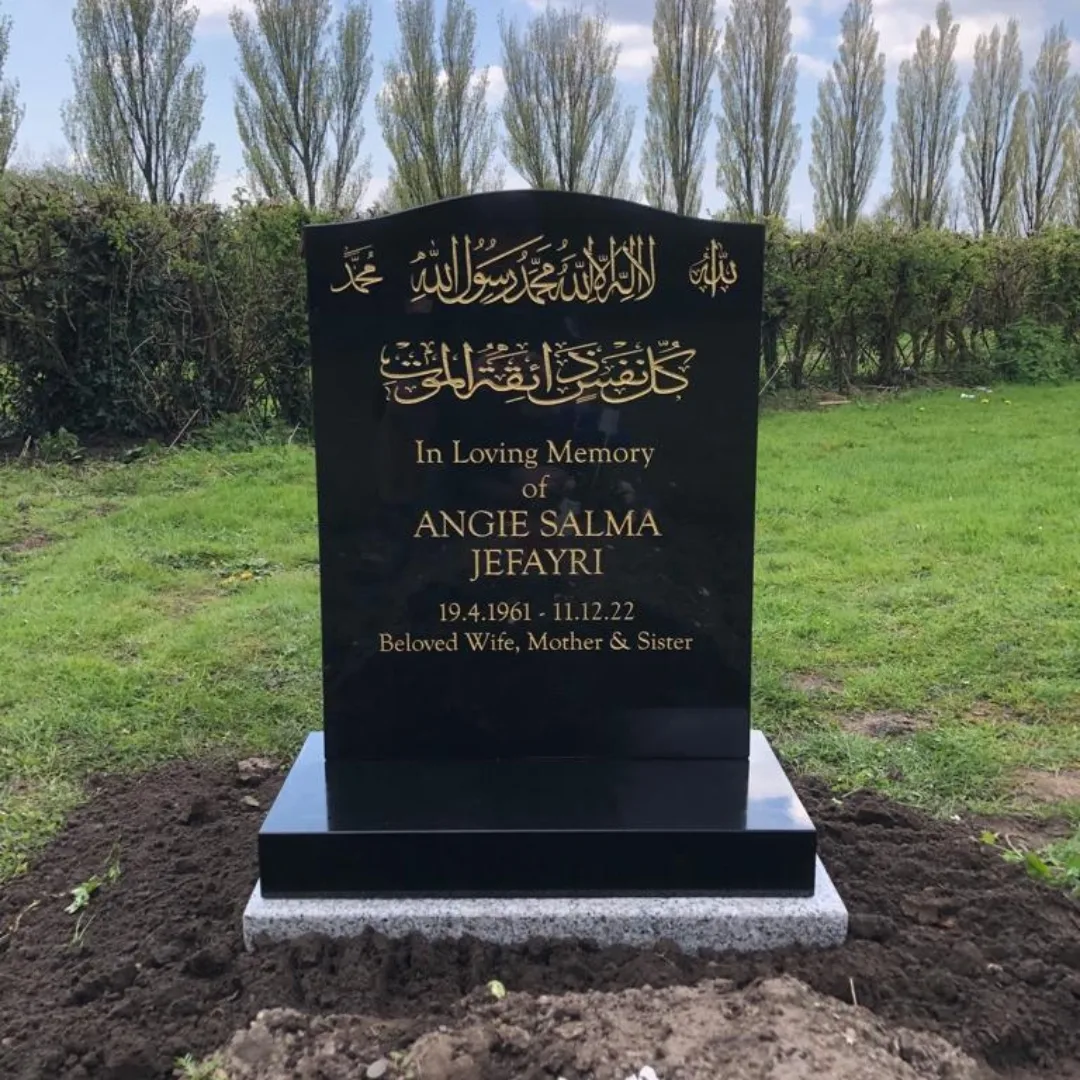
The available stone area, lettering size and line breaks need to work together. A draft that reads well on paper may need a different arrangement on a shaped headstone. If another inscription may be needed later, mention this before the first layout is prepared.
We can discuss the balance between names, dates, personal messages and decorative details. The cemetery’s requirements also need to be considered before the wording and design are finalised.
Review the proof slowly
Before approving the digital design visual, read each line aloud and check it against your agreed draft. Ask for another trusted pair of eyes if that would help. The approved proof should represent the exact wording and arrangement you want.
- Check every name, date, punctuation mark and spelling.
- Confirm line breaks, letter case and the order of languages.
- Make sure the latest family-agreed version is the one being approved.