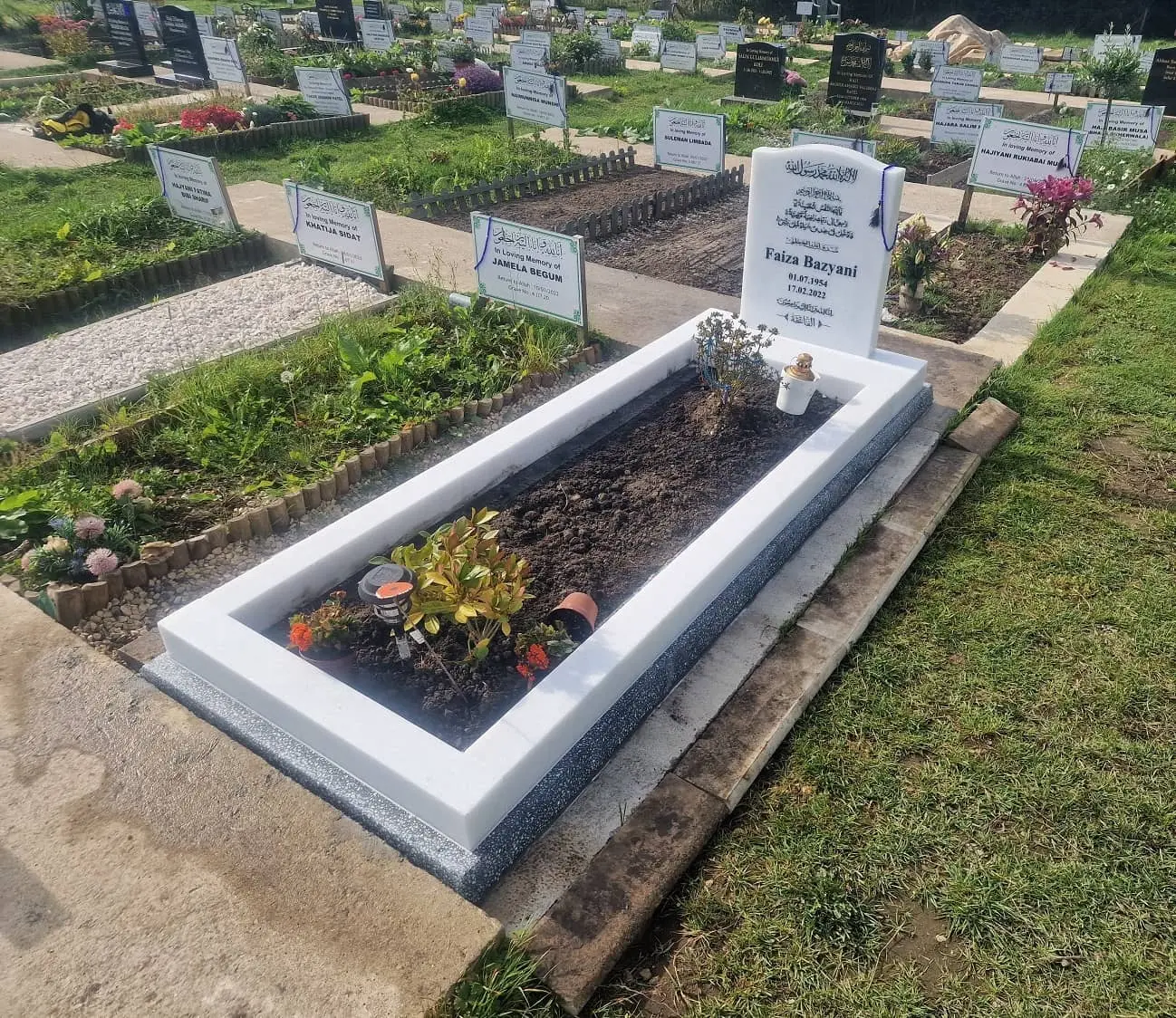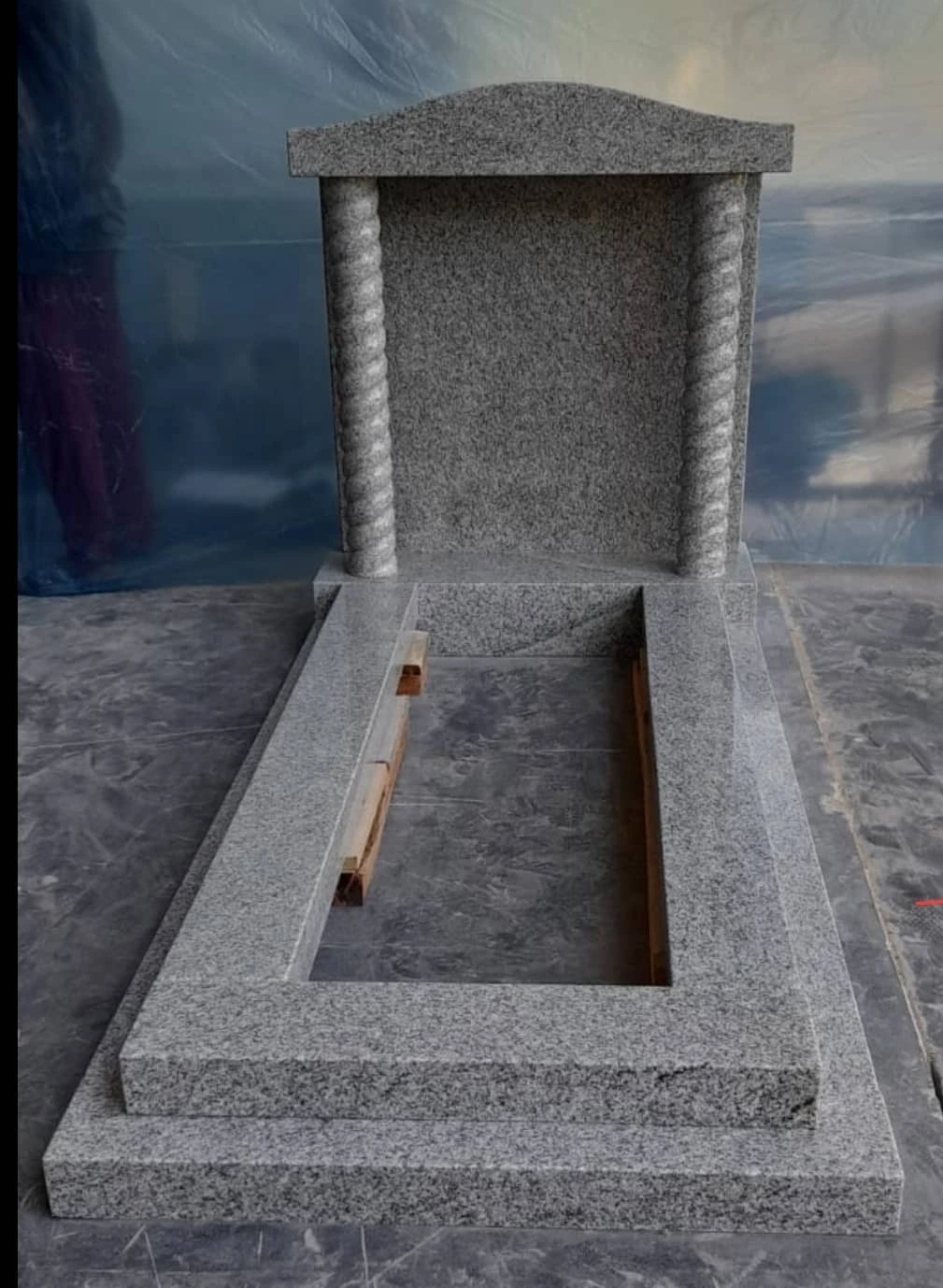
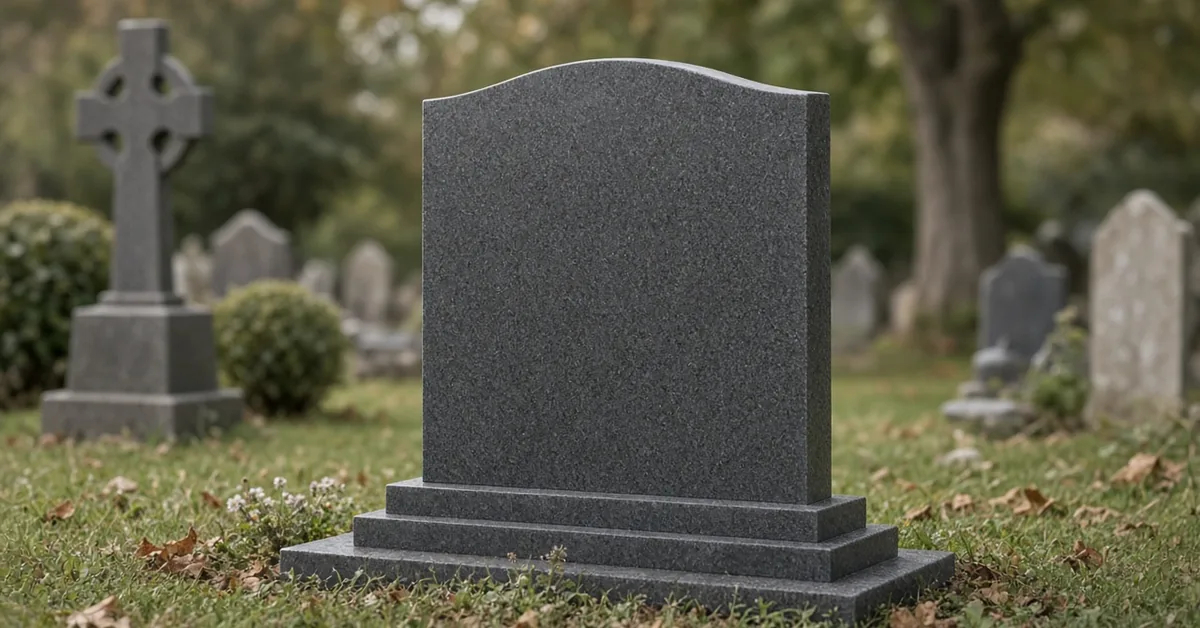
Yes. A memorial shown with religious lettering or symbols can often be adapted for another faith or a non-religious tribute. The possibilities depend on the stone’s shape, the changes requested and the rules of the burial place.
Al Nour’s memorial collection welcomes families of every faith and those choosing a secular memorial. Its photographs show previous work, giving you a starting point for your own design.
Choose the shape separately from the inscription
When looking at a photograph, identify what attracts you. It might be the curved top, dark stone or proportions rather than the wording. Explain which details you want to keep and which should change.
For example, The Markland has a black headstone with a softly curved top, white script lettering and dove motifs. You could use that outline to begin a conversation about different wording or decoration. The photographed doves need not dictate the meaning of your proposed memorial.
The Archtop Set combines an arched black headstone, gold lettering and a matching kerb surround. Families drawn to its proportions can ask about an alternative inscription, subject to confirmation of the design and cemetery requirements.
A symbol engraved on a new stone is a different design decision from a religious form built into its outline. A cross-shaped stone, for instance, would need a different outline if the finished tribute should have no religious association.
Make religious details specific to the person
Begin with the deceased’s wishes and practices. A family’s cultural background does not establish which symbols, prayers or traditions belonged to that individual.
Provide the exact religious symbol or passage you want considered. Where its use is important to your faith, check the wording and placement with a trusted faith representative. Customs can differ between communities within the same religion.
Language also deserves separate consideration. Arabic lettering does not automatically make an inscription religious; its meaning depends on the words. The same applies to other languages.
Al Nour’s inscriptions and calligraphy service includes English, Arabic and multilingual options. Supply an agreed version of each text and have a fluent reader check spelling, meaning and any accents or marks.
Give a non-religious tribute a personal focus
A secular memorial can centre on the person’s relationships, character or interests. Names and dates may be enough. If you want an additional line, choose something that sounds natural to the family.
Possible wording includes:
“Your kindness stays with us.”
“Remembered with love by all your family.”
“A life filled with music and friendship.”
These are starting points to adapt to the person being remembered.
Where permitted, a flower or another meaningful motif could add a personal detail. A design using lettering alone can also feel complete. Ask for a revised layout when removing a religious passage, so the names and remaining words sit comfortably within the available space.
Plan a shared memorial around both people
For a shared memorial involving different beliefs, decide whether each person should have an individual inscription area or whether a shared dedication suits both.
One possible arrangement is separate names and personal wording, with a religious symbol positioned beside only the person it represents. Another is a shared message about love or family, without a statement about faith.
Treat these as proposals to discuss with the family and burial authority. If the second inscription will be added later, reserve enough room now. The first inscription should leave space for the other person’s identity and wishes.
Check the rules for the exact burial place
The cemetery name, section and grave reference matter. Requirements can cover the memorial’s dimensions, stone, finish, surround, inscription and decorative details.
A council cemetery and a Church of England churchyard can have different approval arrangements. Churchyard rules may require wording to be compatible with Christian belief and restrict pictures or motifs. An inscription without religious wording is not automatically unsuitable, but the exact proposal needs checking.
If a design falls outside the permission a minister can grant, a faculty, meaning formal church court permission, may be needed. Ask about the applicable process before committing to manufacture.
Use Al Nour’s guidance on cemetery permissions and memorial installation to prepare your enquiry. Request the current requirements for your particular grave. A similar memorial nearby does not establish that your proposed adaptation will receive approval.
Approve the complete design before manufacture
Ask to see the revised memorial as a whole. Replacing a long religious passage with a short dedication changes the spacing; adding a second language changes how the inscription occupies the stone.
Al Nour provides a digital design visual for approval before manufacture. Review:
Every name, date, punctuation mark and line break.
The exact form, size and position of any symbol.
The balance between languages and the readability of smaller lettering.
Any space reserved for a future inscription.
Agree one final version with the relatives involved. If changes follow a cemetery decision, review the updated proof too.
Ask for a written quotation covering the agreed adaptation. Confirm whether revised artwork, specialist lettering, installation and cemetery charges are included or separately payable. Check what happens to the price and timing if further changes are requested.
Treat an installed memorial as a separate project
Adapting a design before manufacture differs from altering stone already installed. Existing lettering, decoration, available space and the memorial’s condition affect the options.
Send clear photographs and explain precisely what you want changed. Ask whether the existing stone can be adapted, what the finished surface would look like and whether replacement needs consideration.
The cemetery may require a new application for alterations or additional inscriptions. Confirm who is authorised to request the work; family agreement alone may not satisfy the cemetery’s records and consent requirements.
Frequently asked questions
Can a non-religious memorial include a poem?
A short, meaningful passage can be proposed. Check the cemetery’s inscription rules and whether permission is needed to reproduce the chosen text.
Does adapting a design for another faith cost more?
It depends on the work. Ask for a quotation for the actual changes, including any new shape, artwork or specialist lettering. There is no reliable standard supplement.
Can we keep the stone colour but change the symbols?
Often this can be discussed for a new memorial. The mason must confirm the available material and finish, alongside any cemetery restrictions.
Must both languages contain exactly the same message?
They can serve different purposes if that reflects your wishes. Make clear which wording belongs in each language and have both versions checked before approval.
What should we bring to the first consultation?
Bring a design photograph, cemetery and grave details, proposed wording, any symbol references and a comfortable budget. Note which features matter most and which you are happy to change.