Before replacing an old headstone, establish whether it needs replacing, who can authorise the work and what the cemetery will permit. A faded inscription, a loose joint and a badly fractured stone call for different responses. Ordering a new memorial before those questions are settled can mean paying for work that does not solve the problem.
Start with the existing memorial and the grave records. Then decide what needs to change and what you want to preserve.
Have the existing headstone assessed first
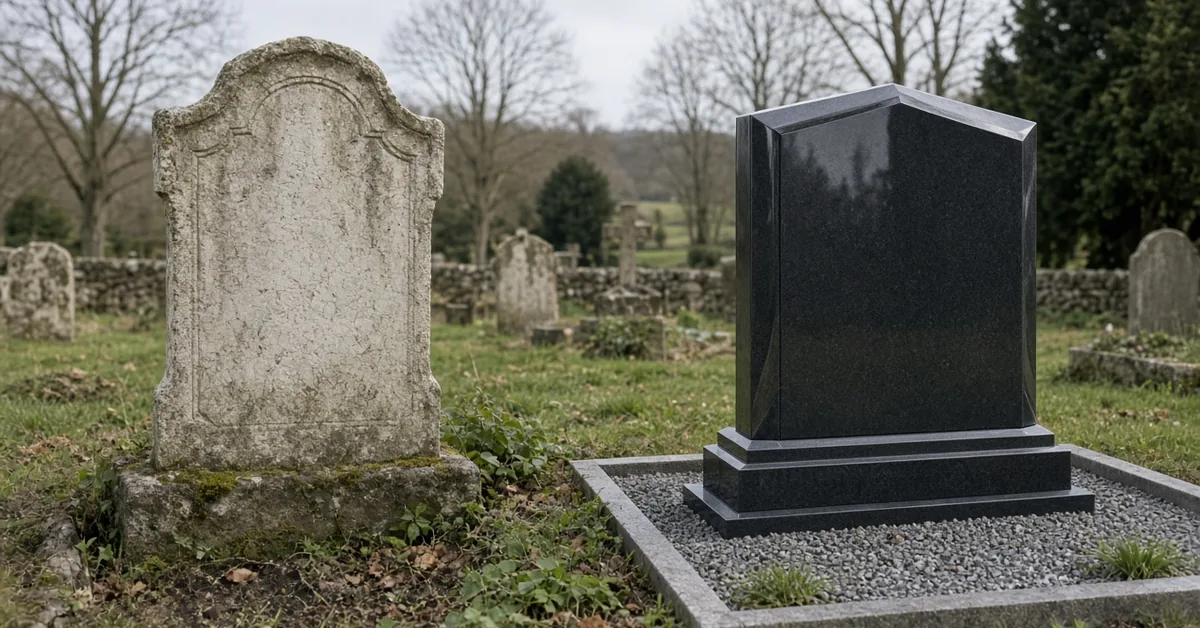
Age alone is not a reason to replace a headstone. Ask a memorial mason to distinguish between surface wear, lettering deterioration and structural damage.
Faded lettering may be suitable for re-lettering. An unstable memorial may need work to its joints, fixings or foundation while the stone itself remains usable. More serious deterioration may make replacement the sensible option, but that decision needs an assessment.
Ask what a repair would achieve, what limitations would remain and how its cost compares with replacement. Al Nour’s memorial cleaning and restoration services include repairs and re-lettering, with the proposed work considered individually.
If the stone is loose, leaning or marked with a safety notice, contact the cemetery office. Do not push it to test stability or attempt to straighten it yourself.
Establish who can authorise the replacement
Being a close relative or paying the bill does not automatically give someone authority to alter a grave memorial.
For many council cemeteries, the application must be authorised by the registered holder of the Exclusive Right of Burial. These rights are separate from ownership of the cemetery land. Ask the office to confirm the registered details, whether the rights remain current and whose signatures are needed.
If the registered holder has died, a formal transfer may be required before an application can proceed. Resolve this early, particularly where several relatives are involved. Agreeing the design within the family does not replace the cemetery’s authorisation process.
Check the current rules for the exact grave section
An existing headstone is not proof that an identical replacement will be approved today. Request the current requirements for the cemetery, section and grave reference.
Confirm the permitted dimensions, materials, finishes and any restrictions on kerbs, photographs, symbols or inscriptions. Ask whether the application must cover removal of the old memorial as well as installation of the new one, and who will submit it.
Churchyards may follow a different approval process from council cemeteries. Ask the church authority what consent is needed. For a listed or historically significant memorial, establish whether additional conservation requirements affect removal or replacement.
Al Nour’s cemetery and area guidance explains the location details to provide. The burial authority remains the source for the rules applying to your plot.
Record the inscription before anything is removed
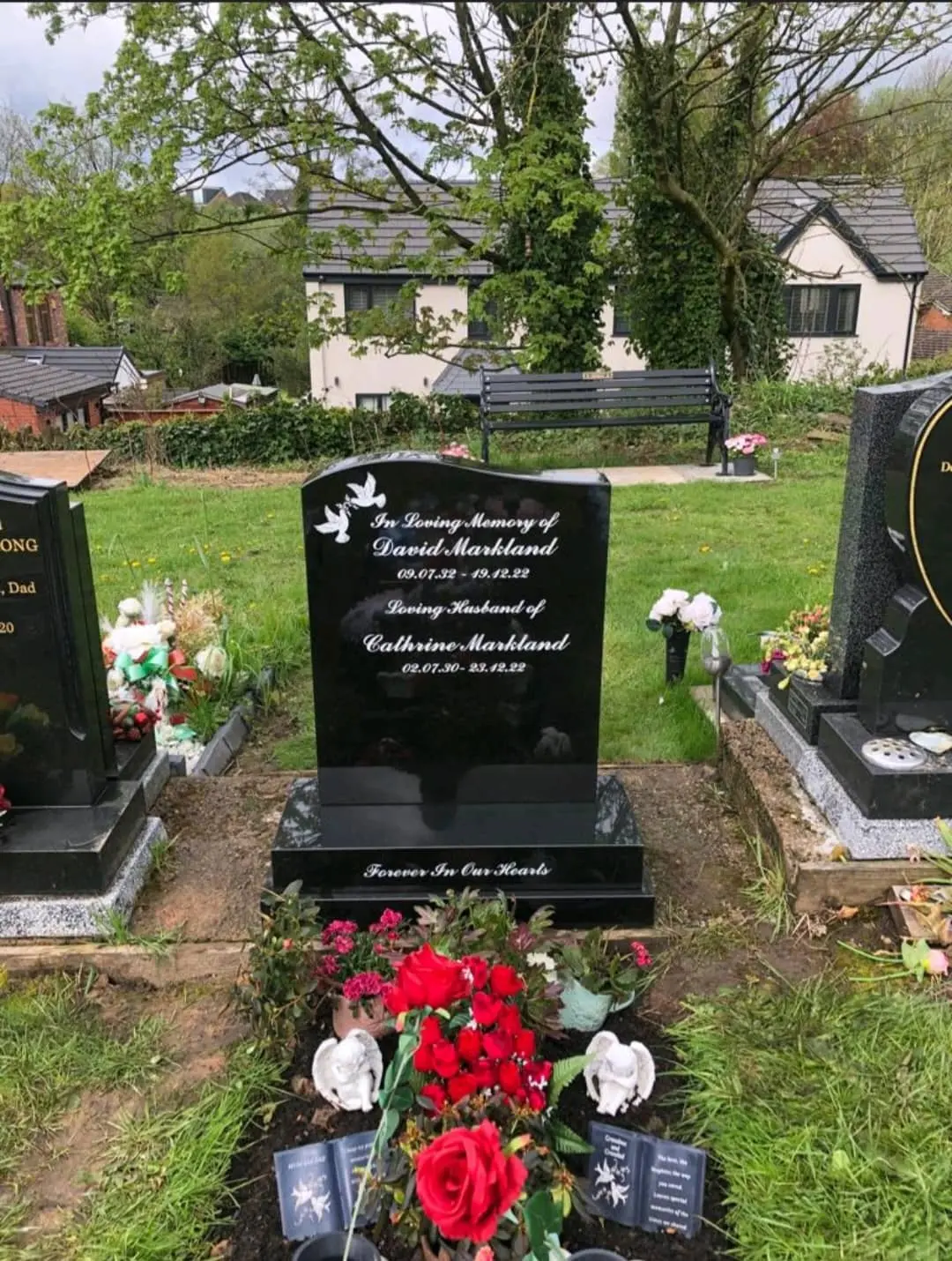
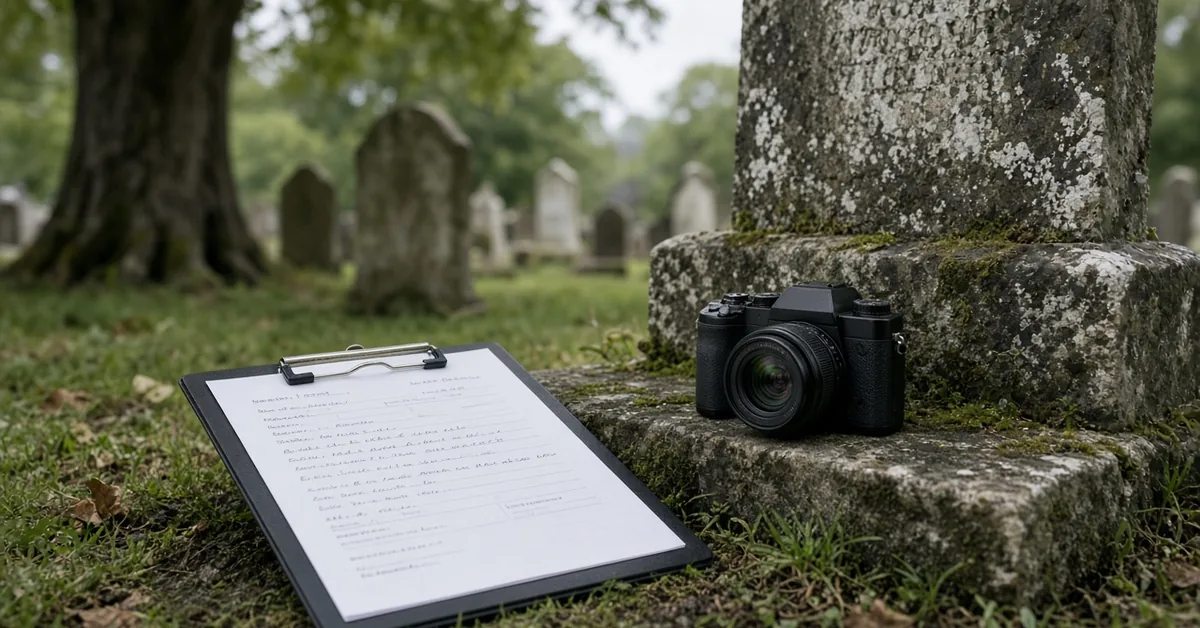
Photograph the whole memorial and every inscribed face, then prepare a written transcription. Include smaller names, dates, verses and details on the base or surround that could otherwise be overlooked.
Check unclear dates against family documents and cemetery records where appropriate. Do not guess a worn letter or silently change an unusual spelling. Agree any correction with the people involved before approving the new wording.
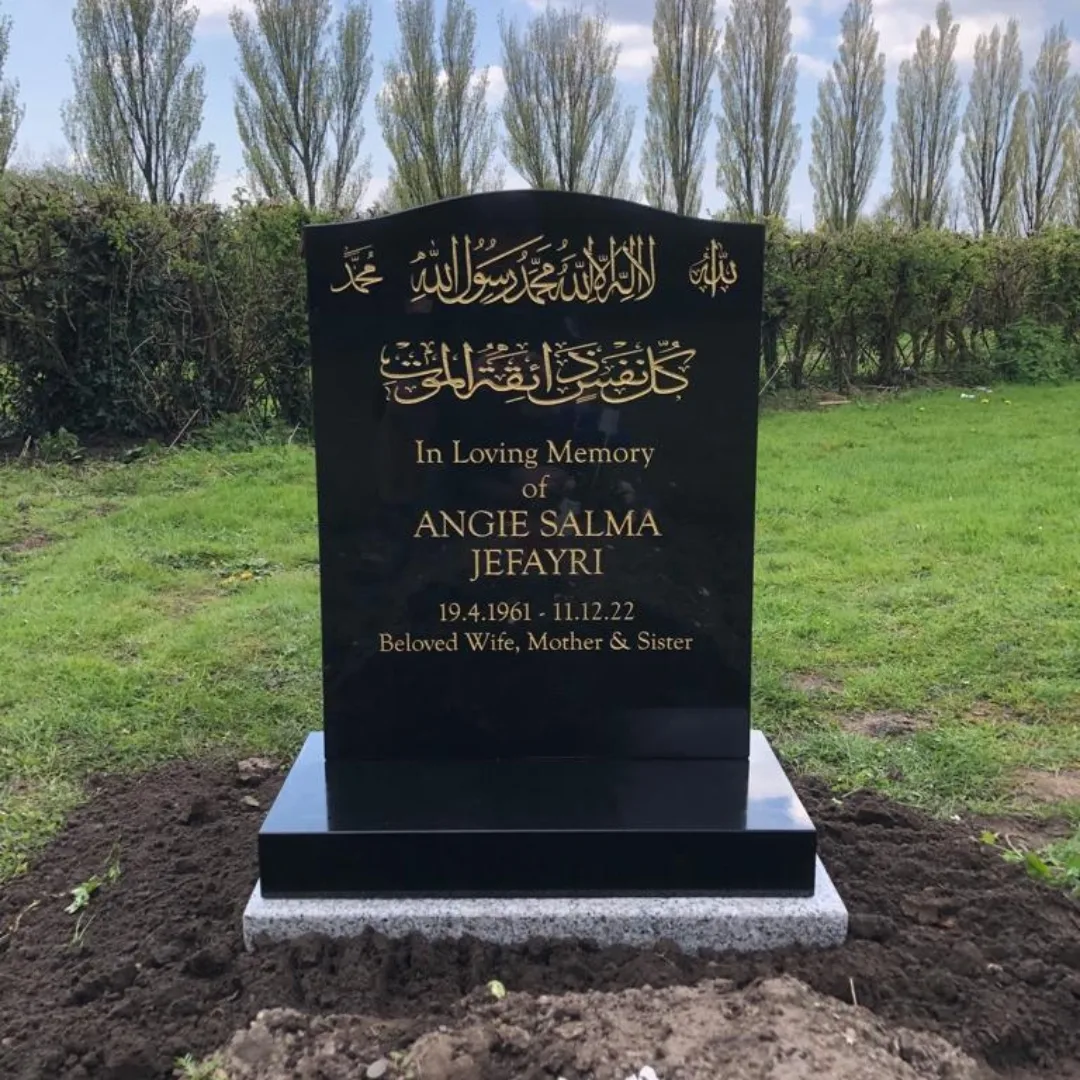
For Arabic or another language, have the exact text checked by a trusted fluent reader. Al Nour’s inscriptions and calligraphy service includes English, Arabic and multilingual layouts. Review the complete design, including line breaks and the relationship between scripts.
Assess the foundation and plan the new layout together
A new stone will not resolve an unsuitable foundation. Ask the mason to assess the base, joints and ground conditions, and explain whether anything can safely be retained. A heavier or differently shaped replacement may need a different installation arrangement.
Use a mason who meets the cemetery’s registration and insurance requirements. Confirm which installation standards apply and what guarantee covers the completed work.
When considering a bespoke memorial design, identify the details worth carrying forward: perhaps the outline, a carved motif or a familiar dedication. If another inscription may be needed later, allow space now so future lettering does not become cramped.
Agree what happens to the old headstone
Put the removal arrangements in writing. Confirm who will lift and transport the stone, whether it will be stored, and what happens once the replacement is installed.
If you want to keep the old stone or a particular feature, raise this before removal. Ask whether it can be recovered safely and whether the proposed arrangement needs permission. Retaining a piece does not automatically allow it to remain beside the new memorial.
Agree any disposal instructions, especially where religious wording is involved. Do not leave an irreversible decision to an assumption in the quotation.
Request a complete quotation and realistic timetable
The price of the replacement stone is only part of the job. Ask for an itemised quotation covering:
Assessment, removal and transport of the existing memorial.
Storage, return or disposal of the old stone.
The new stone, base, lettering and decorative work.
Foundation preparation, fixings and installation.
Permit charges, applicable VAT and any excluded work.
Confirm the deposit, payment stages and how additional work will be approved if removal reveals a problem. Ask what happens if the proposed design needs changing to obtain permission.
The timetable should account for approval, manufacture and cemetery access. Where there has been a recent burial, ground conditions and local rules may affect installation. Avoid booking a family gathering around an unconfirmed completion date.
FAQs
Can I replace a headstone if I have lost the grave deed?
Contact the cemetery office with the deceased’s details and grave reference, if known. It can check its records and explain the evidence or replacement paperwork needed. Possessing an old deed alone does not necessarily establish current authority.
Do I have to use the original memorial mason?
Usually, you can appoint another suitable mason who meets the cemetery’s requirements. Check any existing guarantee before commissioning work, and share details of previous repairs with the new mason.
Can a replacement look exactly like the original?
Sometimes, but stone availability, natural variation, workmanship and current cemetery rules may affect the result. Provide photographs and measurements, then ask which features can be reproduced and which may differ.
Should replacement wait if another burial is planned?
Tell the cemetery and mason before ordering. A further burial may require removal of the memorial again, so coordinating the work could avoid unnecessary handling, storage and refitting costs.
Could insurance cover a replacement headstone?
Possibly, if the cause of damage is covered by the policy. Check the terms and contact the insurer before authorising non-emergency work. Keep photographs, the mason’s assessment and quotations to support any claim.