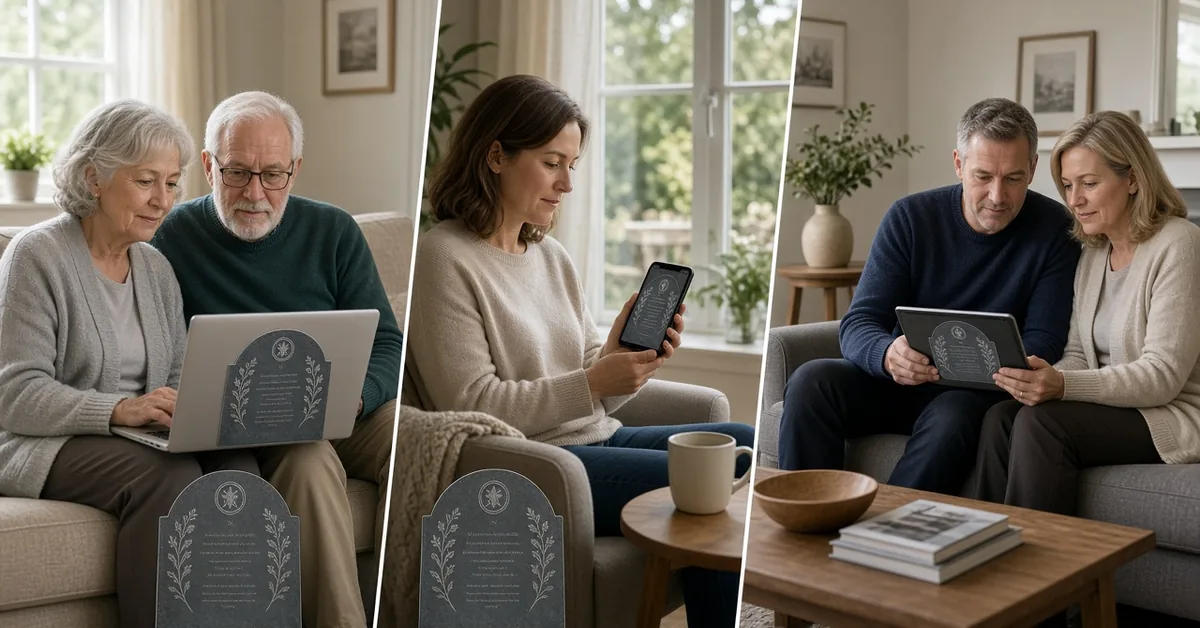
When relatives live in different cities, headstone approval works best with one family coordinator, a clear list of people who must authorise the work, and one complete, dated design proof. Everyone should review the same version before the mason receives instructions to proceed.
Al Nour Memorials’ approach to arranging a memorial includes a digital design visual that families can share before manufacture. A simple review process helps turn those separate conversations into a decision everyone understands.
Establish who must authorise the memorial
Begin with the cemetery name, grave section and plot reference. Ask the cemetery office who holds the relevant burial or memorial rights and whose signatures are required.
In many council cemeteries, the registered holder of the Exclusive Right of Burial authorises memorial work. Joint ownership may mean several signatures are needed. Paying for the headstone, organising the funeral or being the eldest relative does not automatically establish that authority. If the registered owner has died, a transfer may be necessary.
Choose a coordinator to collect comments and communicate with the mason, while keeping the required signatories involved. The coordinator’s role does not replace their consent.
Requirements differ between burial grounds. Share the location when discussing cemetery requirements so the design follows the rules for that particular section.
Agree the limits before reviewing designs
Circulate a short written brief covering the budget, preferred stone and shape, inscription languages and any essential personal details. Identify who will contribute financially and who can agree additional costs.
This prevents a relative approving the appearance while assuming a different price or inscription is included. Ask for a quotation that makes the stone, lettering, installation, permit charges and any exclusions clear.
Agree how feedback will be collected and set a realistic review date. Allow time for postal copies or help with reading documents where needed. A relative who cannot use email should still have a practical way to take part.
Keep one complete proof in circulation
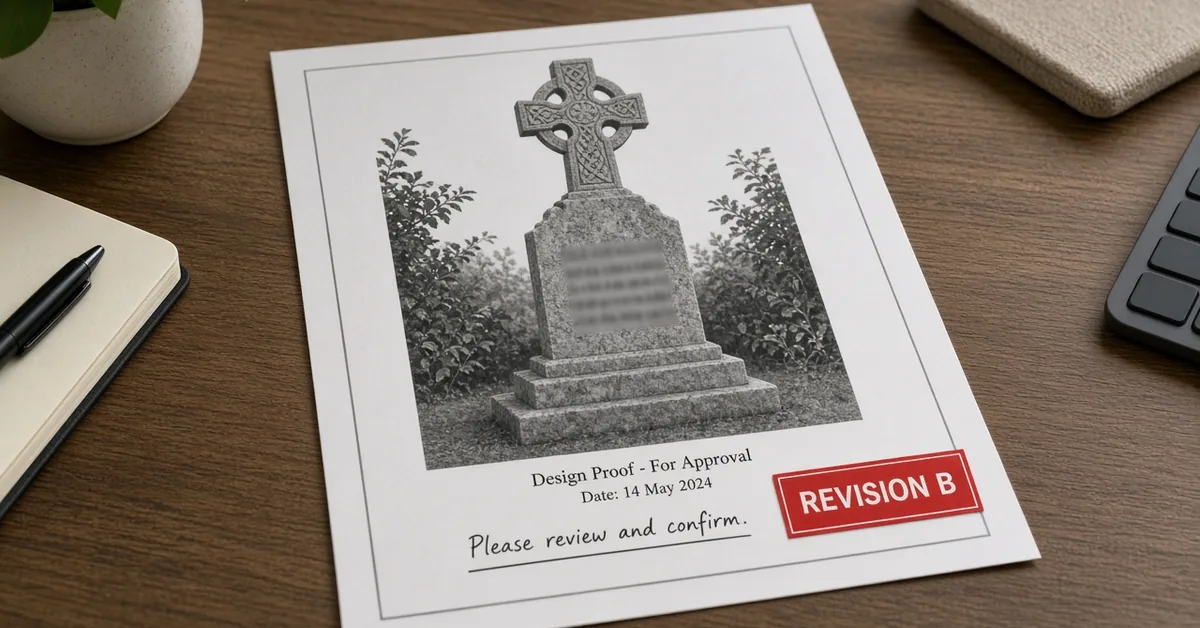
Ask the mason to identify each design proof with a reference, revision number and date. The coordinator should distribute that complete file, including any specifications supplied alongside it.
For example, a relative in Leeds may be commenting on the first layout while someone in Birmingham has already received a revised inscription. An approval without a version reference leaves room for misunderstanding.
Mark earlier copies as superseded and collect corrections in one numbered list. After a telephone or video conversation, send a written record of the decisions. Avoid asking the mason to reconcile separate instructions from several relatives.
Check the wording separately from the appearance
Read the inscription first without judging the overall design. Compare names and dates with reliable family records, and agree the exact form of any familiar name or title.
For Arabic or other multilingual wording, ask a trusted fluent reader to check the actual final visual. Where appropriate, confirm religious wording with a faith representative. Al Nour’s inscriptions and calligraphy service considers the wording and arrangement of different scripts together.
Then review the whole memorial:
Check spelling, punctuation, dates and every line of text.
Confirm line breaks, lettering style, spacing and the position of decorative details.
Match the stated dimensions, material and finish to the quotation.
Identify any space deliberately reserved for a future inscription.
Open the original file and enlarge it when checking fine lettering. A cropped screenshot may hide a missing line or part of the design.
Resolve disagreements before requesting final approval
Separate factual corrections from preferences. A wrong date needs correcting; choosing between two suitable dedications needs discussion.
Ask each person to explain what matters about their preference. One relative may want a longer tribute because a particular relationship feels overlooked. A shorter alternative can sometimes preserve that meaning without overcrowding the inscription.
Where views remain divided, arrange one focused conversation around the unresolved point. Ask the mason about space or technical feasibility, but keep family decisions with the family. Do not treat silence as consent, or use a family vote to override a required owner’s authorisation. If that authorisation is disputed, pause the instruction to proceed.
Make the final approval specific
Once corrections are complete, request a fresh proof with all changes incorporated. Review the entire version again, since a wording change may also alter spacing.
Keep three decisions distinct: the family’s agreement, the required customer authorisation and the cemetery’s permission. The mason’s approval procedure and the cemetery’s permit requirements both need to be satisfied.
Ask what form of written approval the mason accepts. A message could read:
I approve proof [reference and revision], dated [date], for [name and grave reference], including the inscription, layout and specifications shown. I accept quotation [reference]. Please confirm the required authorisations and cemetery permission are complete before manufacture begins.
Use the mason’s own form where required. Confirm whether the cemetery accepts electronic signatures, scanned forms or requires originals. An email approving the design does not automatically replace a signed permit application.
Set a clear process for later changes
Before signing, ask when manufacture will begin and what happens if someone requests an alteration afterwards. A late change may affect cost, completion time or cemetery approval; ask for its implications in writing.
If an error is discovered, contact the mason immediately and request a hold. Obtain confirmation that work can be paused, rather than assuming a message has been read. Any replacement proof should receive fresh approval.
Save the accepted design, quotation, authorisations and permit correspondence together. Give another relative access to the agreed records so future questions do not depend on one person’s inbox.
Frequently asked questions
Must every relative sign the approval?
Not necessarily. The mason and cemetery should confirm the required signatories. Other relatives can review the design without becoming formal applicants or joint owners.
Can we approve the headstone without meeting in person?
Digital proofs allow relatives to review the same design remotely. Confirm the accepted signing arrangements, particularly if the cemetery needs original documents.
What if a relative misses the review deadline?
Contact them directly and establish whether they need more time or another format. If their authorisation is required, the deadline cannot replace it.
Can someone change their mind after engraving starts?
Contact the mason promptly. What can be changed depends on the work already completed. Ask about available options, costs and revised timing before agreeing further work.
Should we book a family visit around the expected installation date?
Wait for a confirmed arrangement before making firm travel plans. Permission, manufacture and installation each affect timing, so an early estimate may change.