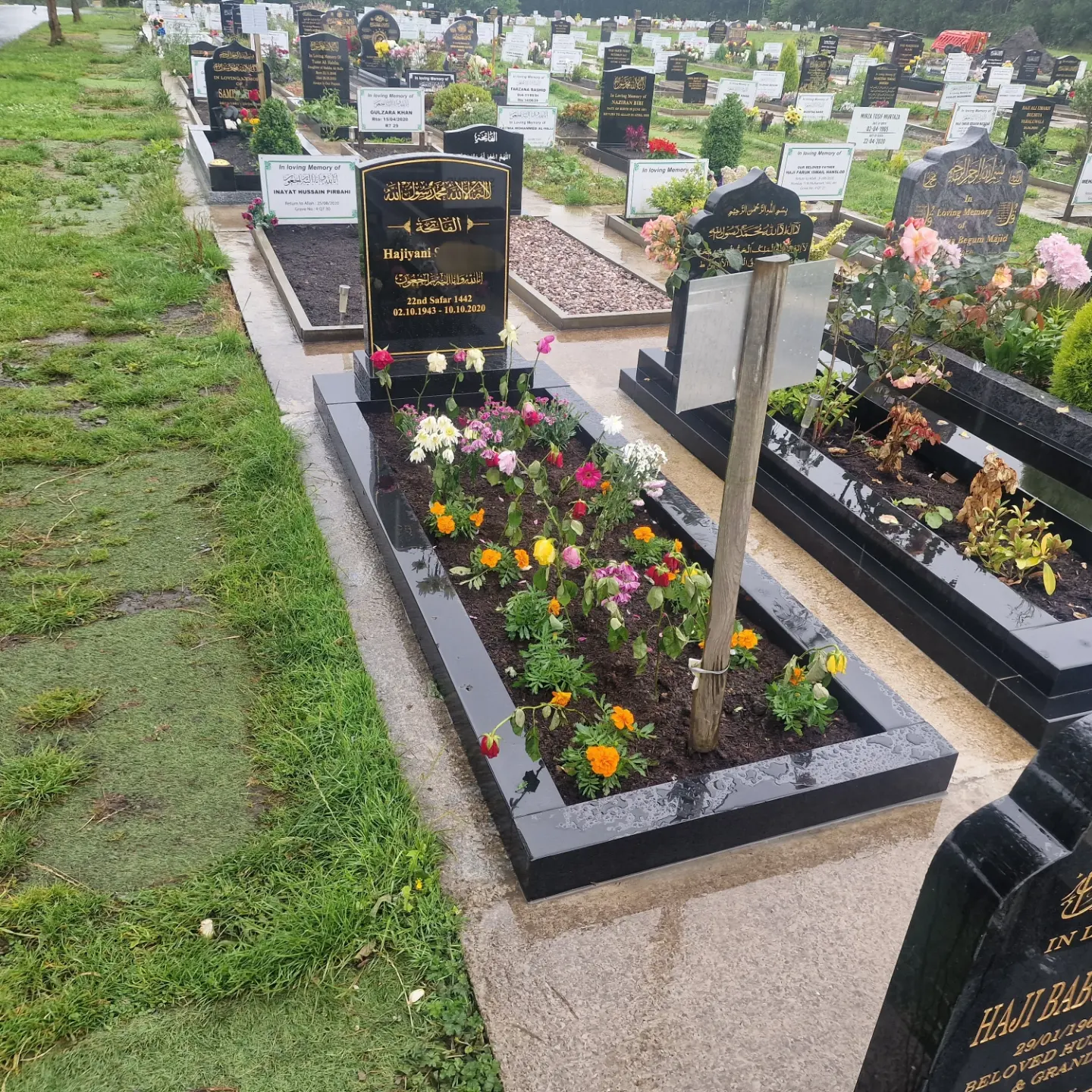
If you have lost a grave number, contact the cemetery office with the deceased person's full name, date of death and any burial details you have. Staff can often trace the entry and confirm the section and plot reference.
Before ordering a memorial, you need to establish exactly which grave it belongs to and who can authorise the work. A photograph or remembered location can help, but the cemetery's records should settle those questions.
Gather the clues already held by your family
Start with funeral paperwork, cemetery receipts, old emails and any grant or deed relating to the grave. Ask the relative who arranged the burial whether they kept correspondence with the cemetery or funeral director.
Put the following details in one note:
The deceased person's full name, including alternative spellings or former surnames.
Their date of death and, separately the burial date if known.
The cemetery name and town, even if you are unsure of the section.
Names and burial dates of relatives believed to share the grave.
An address or age at death may help distinguish people with similar names. Label uncertain details as approximate rather than presenting a guess as fact.
The funeral director may still hold useful arrangements or correspondence. Ask whether these identify the burial ground or include a plot reference; the availability of older records will vary.
Request a search from the correct records office
For a council cemetery, contact its cemeteries or bereavement services team. For an independently managed burial ground, contact its operator. For a churchyard, begin with the parish office older registers may have moved to a local archive.
If you only know the town, first establish which cemetery was used. An order of service, funeral notice or the person who organised the funeral may narrow the search. The place where someone died does not necessarily identify where they were buried.
Explain that you are locating a grave before arranging a memorial. Ask what information the office needs, whether a search fee applies and when you should expect a reply.
In Bolton, the Cemeteries Office handles plot enquiries, while older burial records can also be consulted on microfilm at Bolton History Centre. Elsewhere the relevant council or burial-ground operator can explain its own arrangements.
Ask for the complete plot reference
A burial register entry number, a grave number and a deed number can identify different records. Avoid copying an unexplained number straight onto a memorial enquiry.
Ask the office to confirm:
The full cemetery name and address.
The section, compartment or block, where applicable.
The grave or plot number, including every letter and suffix.
The burial entry that connects your relative to that grave.
Request an email or copy of the relevant record so you can pass on the reference accurately. If there are several people with the same name, compare dates and other available details before accepting a match.
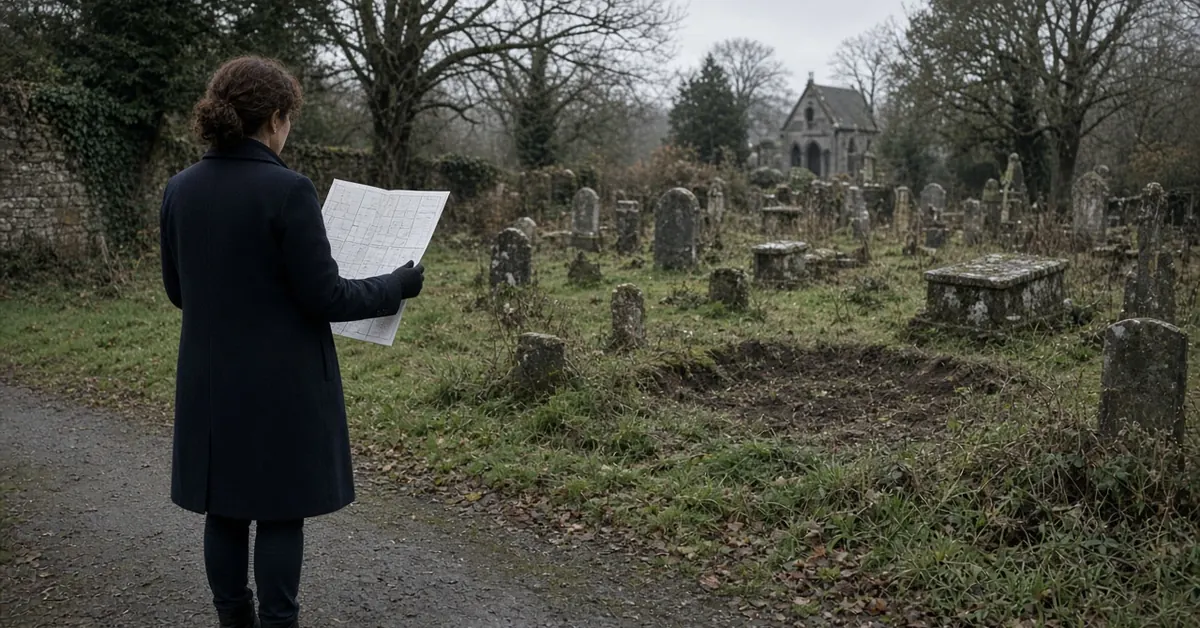
Where a grave plan survives, ask staff to show the plot on it. Arrange help with locating an unmarked grave before travelling. Nearby headstones and photographs are useful supporting clues, but staff should confirm which space the record identifies.
Follow up carefully when a search finds nothing
An empty online result does not prove that a burial record is missing. The database may cover only certain cemeteries or dates, while older entries remain in handwritten registers or on microfilm.
Check the search coverage before trying again. Use a wider date range, a surname without a first name, or alternative spellings. For names transliterated from Arabic or Urdu, the English spelling in the register may differ from the spelling your family now uses.
Remember to distinguish the date of death from the date of burial. If one is unknown, say so rather than entering the other as an exact substitute.
If online searches still fail, ask who holds the original register and grave plan. These may be kept separately. A parish burial entry can establish that a burial took place without identifying its precise position. Where records cannot resolve the location, ask the burial authority what can be established before committing to a memorial.
Confirm who can approve a memorial on that grave
Finding the plot does not automatically establish permission to install a headstone. At many council cemeteries, consent is needed from the registered holder of the Exclusive Right of Burial, alongside the cemetery's approval for memorial work.
Ask the office to explain how the authorised applicant is established. Being a close relative, paying for the funeral or holding an old deed does not necessarily make someone the registered rights holder.
If the registered holder has died, a transfer may be needed. If paperwork has been lost, ask which evidence or declaration the authority accepts. These are separate issues, and the office should explain the process that applies to your circumstances.
Also establish the grave type and current section rules. A public or unpurchased grave may have different memorial restrictions. Size, materials, kerbs and inscriptions can depend on the section. Al Nour Memorials' cemeteries and areas guidance explains why the exact location matters when discussing a design.
Give your memorial mason a clear starting point
Send the confirmed plot reference, the cemetery office's correspondence and any relevant permission or ownership documents. Include photographs of the existing grave and explain whether you want a new memorial, a replacement or an additional inscription.
You can explore memorial designs while enquiries continue. Ask which parts of the quotation remain provisional until the location and requirements are confirmed. Hold off on authorising manufacture until those matters are resolved.
Al Nour's memorial planning process includes reviewing the design and agreed details, with cemetery requirements and permissions considered before manufacture and installation.
Frequently asked questions
Will a death certificate show the grave number?
Usually, no. It can help confirm identity and the date of death, but you should obtain the plot reference from burial records.
Can an unmarked grave still be found?
Often, yes, if a usable register and grave plan survive. Ask the cemetery to confirm the location before making arrangements for a headstone.
How long does a grave search take?
It depends on the records and the office's workload. A manual search can take longer than checking a digital index, so request a timescale before booking a visit.
What if the person was cremated?
Establish what happened to the ashes. The cremation record alone may not identify a later burial elsewhere. Ask about any separate interment record or scattering location.
Can I arrange this while living outside the UK?
You can begin enquiries by email or telephone. Ask which documents can be supplied remotely and whether anyone needs to attend for identification or paperwork.