You should avoid using a domestic pressure washer to clean a headstone. A powerful jet can remove more than dirt: it may damage the stone, disturb joints and harm lettering. The risk depends on the whole memorial, including its finish and previous repairs.
Specialists sometimes use controlled low-pressure equipment on suitable, sound surfaces after assessment and cleaning trials. That does not make a household machine safe to use on a family grave. Before trying any cleaning method, establish what the memorial can tolerate.
Why pressure washing can cause lasting damage
A jet can strip loose grains from weathered stone, leaving an uneven surface and weakening the edges of carved letters. Once original material is lost, rinsing or polishing cannot put it back. A newly exposed, rougher surface may also collect dirt more readily.
Joints are another concern. Pressure washing can erode jointing material, creating routes for water to enter. Subsequent freezing and thawing can worsen deterioration and affect the memorial’s stability.
Turning the machine down is not a reliable safeguard. The nozzle, distance, water flow and time spent on one spot all affect the result. There is no single DIY pressure setting that is safe for every headstone.
Does the type of stone make a difference?
Yes, but identifying the stone is only part of the decision.
Granite: A sound granite surface may tolerate certain professional cleaning methods, but its lettering, joints and decorative details need separate consideration. A hard stone does not make every part of the memorial equally resistant.
Marble and limestone: Weathered surfaces can become grainy or powdery. Aggressive cleaning may remove that weakened surface along with the dirt, making fine carving less distinct.
Sandstone: Older sandstone can develop a brittle outer crust that separates from the material beneath. Trying to blast away dark patches risks removing part of the face.
Do not identify material from colour alone. If you cannot confirm the stone or its condition, ask a memorial mason before choosing a treatment.
What to check before touching the headstone
Check with the cemetery office or churchyard representative about permitted cleaning. Make sure you have authority from the memorial owner where appropriate. Requirements can differ for family maintenance, contractors, chemical treatments and historic memorials.
Photograph the whole memorial and the area causing concern. Look for cracks, missing joint material, flaking surfaces, loose lettering or a change in alignment. Do not push or rock the headstone to test its stability. If it appears loose or leaning, keep clear and notify the cemetery team.
Check any existing guarantee and care instructions too. An unsuitable cleaning method could affect the cover provided.
For older stones, Al Nour’s guidance on caring for an existing memorial explains why assessment should come before treatment.
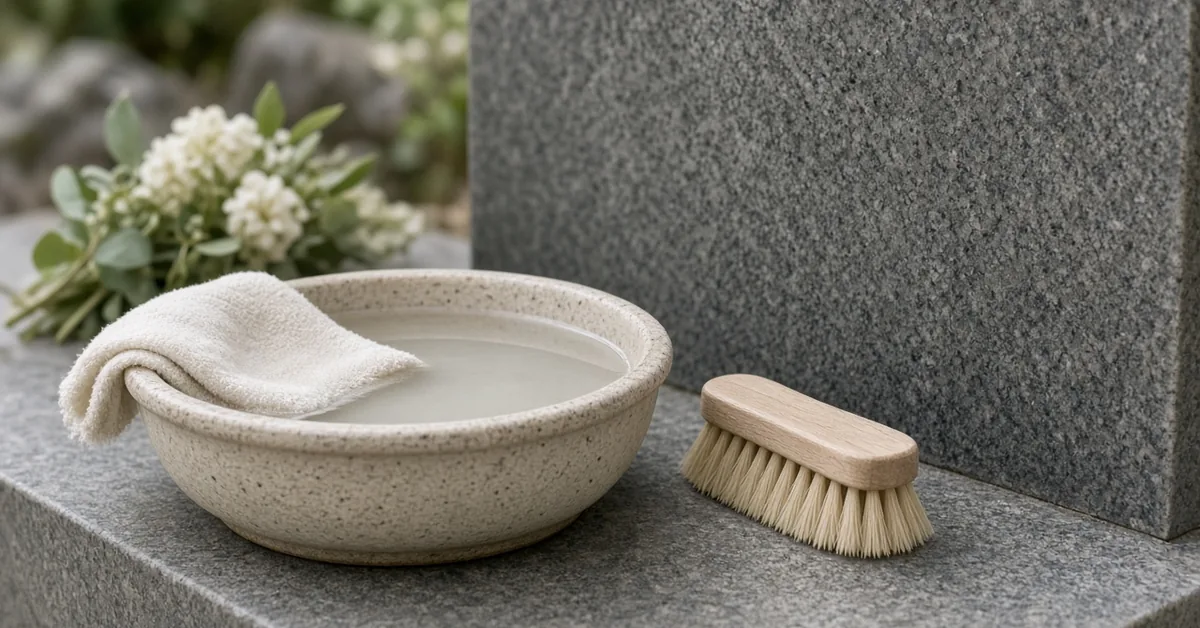
A gentler approach for light surface dirt
If the memorial is sound, permission is in place and its care instructions allow washing, start with the least intervention needed. These steps are for light dirt on suitable stone, not damaged surfaces or specialist restoration.
Take enough fresh water to finish rinsing before you start. A small bottle may be insufficient, especially if the cloth keeps picking up grit. Keep dirty water away from neighbouring memorials, planting and paths, and follow the cemetery’s arrangements for disposal.
Choose suitable weather. Postpone wet cleaning during freezing conditions or if frost is expected within the next 48 hours.
Prepare clean equipment. Use fresh water, a clean soft cloth or a soft hand brush appropriate to the finish. Avoid scouring pads and metal brushes.
Try a small, discreet area. Gently wet the surface and let ordinary dirt soften. Use minimal pressure, rinse and allow the trial area to dry before judging it.
Work carefully in small sections. Keep the area wet while cleaning and rinse dirt from the cloth or brush frequently. Avoid rubbing painted, gilded or fragile lettering.
Rinse gently and stop early. Use clean water without a forceful jet. Stop immediately if grains, flakes or colour come away.
If water does not shift the mark, leave it for assessment. Do not turn a cautious clean into repeated scrubbing or introduce a household chemical mixture.
Should you remove all moss and lichen?
Not automatically. Lichen can be part of an established churchyard habitat, and its presence does not by itself mean a headstone needs cleaning. Some growth may be left undisturbed, particularly on historic stone.
Where growth obscures an inscription or there are concerns about the underlying surface, ask for advice on whether removal is appropriate. Do not pick firmly attached growth out of letters or scrape it off with a blade. The decision should consider both the memorial’s condition and the burial ground’s conservation priorities.
When to arrange professional cleaning or restoration
Persistent staining, deteriorated lettering and damaged joints need different solutions. Cleaning will not replace missing paint or gilding, repair a crack or stabilise a loose memorial.
Al Nour’s memorial cleaning and restoration service covers discussions about cleaning, repairs, restoration and re-lettering. The proposed work depends on the individual stone and any cemetery requirements.
Send the cemetery name, grave reference, current photographs and details of earlier repairs or cleaning. Photographs help explain the problem, but an on-site assessment may still be necessary.
Before agreeing to work, ask which surfaces are included, how inscriptions will be protected and what improvement is realistic. Confirm whether lettering work is a separate item in the quotation. A suitable result may retain natural ageing and some staining.
Frequently asked questions
Can I use vinegar or bleach instead?
No. Vinegar is acidic and can attack marble and limestone. Household bleach can leave harmful salts in porous stone. Ask for a cleaner specifically suitable for the memorial if plain water is insufficient.
Is a brush attachment on a drill safer?
No. Powered brushes can abrade the original surface, including when the bristles are nylon. A tool that removes staining quickly may also remove stone. Use only an appropriate soft hand brush where cleaning is suitable.
What if I have already pressure washed the headstone?
Stop further treatment and photograph any changes. Seek an assessment if you notice rough patches, missing lettering or damaged joints. Avoid applying paint or sealant to conceal damage. Report any apparent instability to cemetery staff immediately.
Why are white marks still visible after washing?
White marks may be mineral deposits, salts or a change in the stone’s surface rather than removable dirt. Their cause needs identifying before further treatment. Repeated washing or an acidic cleaner could make the problem worse.